This year, my mental health has improved drastically. I'll speak on it more in my look back over my summer in Montana that I will be releasing in a couple days, but there were many things I attribute this to. Spending more time outside, being way more active, spending less time in front of screens- all massively important to me that I hope to continue now that I am home permanently. However, one thing that matches up to those incredibly healthy habits is that I consumed a lot less news.
Many if not all people reading this now know is that from 2023 to early this year, I worked as a coordinator in the local politics world in Seattle. One of my main duties was staying up to date in all happenings that could affect our future policy advocating, so I was paying attention and reading up on local and state news for up to hours a day. Not only that, but paying attention to national politics is one of my main hobbies. So every day for three years I would get to work, spend all this time reading about our local political landscape and then come home and spend even more time reading into our national political landscape. And when nearly all news is as depressing at it has been for the last 10 years, that clearly weighed down on me to the point I just could not take it anymore.
So I detoxed. I quit my job, and I spent 5 months off the grid where if I wanted to use the internet I had to hold up my phone directly to the window of my bus. If there's one way to stop scrolling, that certainly is it. And you know what? I was completely happy not spending hours a day reading the news or listening to political podcasts, despite it being one of my main passions.
And some people who know me very well might be shocked to here this, and maybe even a little sad. To pretty much all my family and friends, I am the person to talk to when it comes to learning what everything happening in D.C. means for the future. So did this mean I became less informed? Actually, not at all.
I was surprised how much in the know I still was about most major news events of the summer. Of course I didn't tune out completely. I still had notification alerts set for multiple media outlets that would buzz my phone multiple times a day. And it's not like I stopped consuming articles and political podcasts completely, I just did it way less. And because of that it made me focus on the news that was actually important.
So when people would ask me if I knew about, let's say, Trump renaming Lake Ontario to Lake America, I'd be like "yeah… eh, whatever". Because I didn't spend 30 minutes reading all articles in full of one of the most stupid stories of the summer. Yeah, I don't like what happened, but does it really matter all that much? The mainstream media sure wants to make you think it does.
So I continued to be informed yet immune from news addiction, that was at least until I went to Japan. The thing about traveling in Japan is that every day you have hours of downtime while you are riding public transit, and that is a good thing! I could gush for hours about how efficient the trains are here. But what else are you going to do on the train other than look at your phone, especially when it's frowned upon to talk. Eventually you get done doing all your little app updates, get through your crosswords, watch the videos you have downloaded, and all that's left is that pesky little news app, calling you as one of the few apps constantly updating.
Saying that our current media landscape is broken is an ice cold take. I don't think really anyone really disagrees with that, but where there major disagreements are is how it is broken. That's what I'm here to rant about today because I think I've cracked the code, but we'll see if I'm able to offer any real solutions.
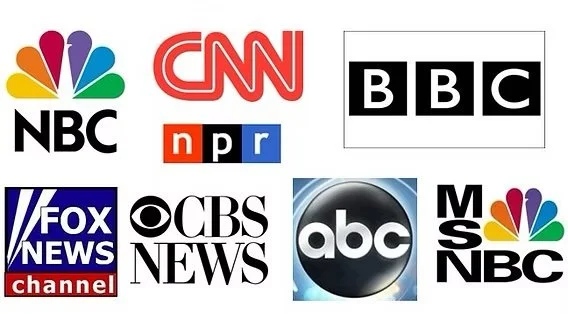
Personally I think I'm at a point in my life where I don't have much trust for the media at all, and I mean that across the political spectrum from MSNB- I mean MSNOW to Fox News, it's all baloney. Now wait just a moment there! Saying that could make me sound like some sort of nut conspiracy theorist. I think those people aren't wrong that it's all bull plop, but I think where they direct their anger is misguided.
What we hear a lot when is comes to distrust of the media is FAKE NEWS. I'm gonna come out and say it first because it is important. I think the vast majority of news is real, especially what comes from mainstream media sources, and I think this fear is a bit overblown. Are there issues with fake news? Of course, but I think these are coming a lot more from "independent media" sources that you see on Facebook, YouTube, or TikTok, and we all fall for it. These people are opinion "journalists" that often present their opinions as fact. A lot of independent media is good, and a lot of independent media is bad, but I want to talk about established media networks from the New York Times, to the Wall Street Journal, to Fox News, to the New York Post, to the Washington Post, to MSNB…MSNOW (shoot I did it again!).
It's not necessarily about how they cover their stories, while this is still a separate problem. I think it's more about what they choose to cover. I'll give you an example from the past few weeks that inspired me to write this after ranting to Kosuke one too many times.
The midterms are coming up tomorrow—please vote by the way if you haven't already! But with campaigns going back nearly two years and coverage being about nearly nothing else, you'd find it hard to believe that there was anything going on outside of the midterms. And these elections are very important, but the specific articles that get recommended to me more than anything else are nothing but the latest poll numbers. I'm a data lady, and I love me some good statistics to parse through, which is why I love elections so much. But when you're less than a week away from election day, are the polls really all that important. Should knowing that Michigan was D+2 last week and D+4 this week have any impact on your vote? Is it important to know that?
Of course not, because the polls don't have any say over who actually wins an election! Votes decide who win elections. But don't you want to know who is gonna win now instead of waiting until election night? Who doesn't?! So you click on article after article for each new poll that comes out that shows 3 point discrepancies in Texas. "Talarico is Going to Win, New Poll Says!", "Talarico Losing Ground with Black Voters, Poll Says". So which is it? We'll if it seems like it's constantly changing every day, every hour, you'll keep reading more, which means more ad revenue for USA Today!
So all I see in my feed is polls and opinion articles on who pundits think will win. And then you're gonna be mad in a week when many of the polls are off by a few points like they always are, because they aren't an exact science. But you'll be mad at the pollsters for being somewhat off instead of the media force-feeding them to you. The pollsters are doing they're job! They're only there to help give guidance to campaigns on where to spend resources. Other than having vague knowledge that all these states are in play, the polls do nothing for us but make us click over and over again.
But you know what you see a lot less. Anything about the election results in Brazil, Serbia or Israel. All of these are so complex for me to explain here (imagine explaining the entire dynamics of the US midterms in one paragraph), but all signal massive shifts in their respective regions of which kinds of people are in charge. Please look up each for yourself because the unexpected happened in every race. And it effects us too, because in Brazil, the loser and Trump ally, Flavio Bolsonaro, fled to America. I wonder if ICE will detain him for seeking asylum?
And something else you might not know is that Donald Trump was credibly accused of rape connected through his ties to Jeffrey Epstein. Interesting how those stories seem to disappear. You could argue that maybe news sites won't cover it because it can not be fully verified. But that's the thing, you can hardly ever truly verify that crime, which is why so few women come forward against their attacker despite upwards of a 1/5th to a quarter of all women having experienced sexual assault in their lives. The only major news site I could find that reported on it was TIME Magazine.
You see, news sites do have a narrative. But it's not usually about the facts they get wrong. It's about what they choose for you to see. Like how every other article or segment published by Fox News highlights a negative story about trans people. Or how almost every single one of these sites refuses to give speaking time to someone critical of the Israeli government. Why is that? Well maybe that's when I start to get a little conspiratorial. But that's for another day. All that we do know for sure is that news companies get their money from somewhere, and often that money has interests on what gets reported. Ultimately, all they want is for you to constantly click on the things that don't matter, and then hide the things that might legitimately make you think.
So what do we do? It's easy to just say, get money out of media and politics, but that's not gonna happen. And these sites do still serve a purpose—they're the only sites large enough with writing processes that provide extensive fact checking. But I think the best thing you can do is think about which media sites you chose to support the most. Don't necessarily do it based on what you agree with, but who you see cover news that other networks won't cover. I tend to really like The Guardian for this reason. Look into where news organizations get their money! Is it largely donation based like NPR or AP? I tend to trust that a little more. And also, don't be afraid to look independent. But just make sure with no matter where you get your news to always think critically. What are their biases, where they get their funding, and if the information can be fact-checked through primary sources. But most importantly, before you click on an article or watch a news piece, think to yourself, will I learn something important from this.